
The Ultimate Wall Art Size Guide: How to Choose the Perfect Canvas for Your Space
One of the most common mistakes in interior design isn't picking the wrong style—it’s picking the wrong size.
We’ve all seen it: a beautiful living room with a tiny, "postage stamp" sized painting lost on a massive wall. At Savy Canvas, we want your hand-painted artwork to command the room, not disappear into it.
Whether you’re eyeing a massive 3D textured abstract or a serene Wabi-Sabi piece, this guide will help you choose the perfect dimensions with confidence.
1. The Golden Rule: The 2/3 to 3/4 Ratio
When hanging art over furniture (like a sofa, bed, or sideboard), the most important rule is the Ratio Rule.
The Rule: Your artwork should span between 60% and 75% (roughly 2/3 to 3/4) of the width of the furniture below it.
-
Example: If your sofa is 80 inches wide, your painting should be between 48 and 60 inches wide.
-
Why? This creates a visual anchor. If the art is too small, the furniture looks "heavy" and the wall looks "empty."
2. Room-by-Room Breakdown
In the Living Room (Above the Sofa)
The living room is usually where you want to make the biggest statement.
-
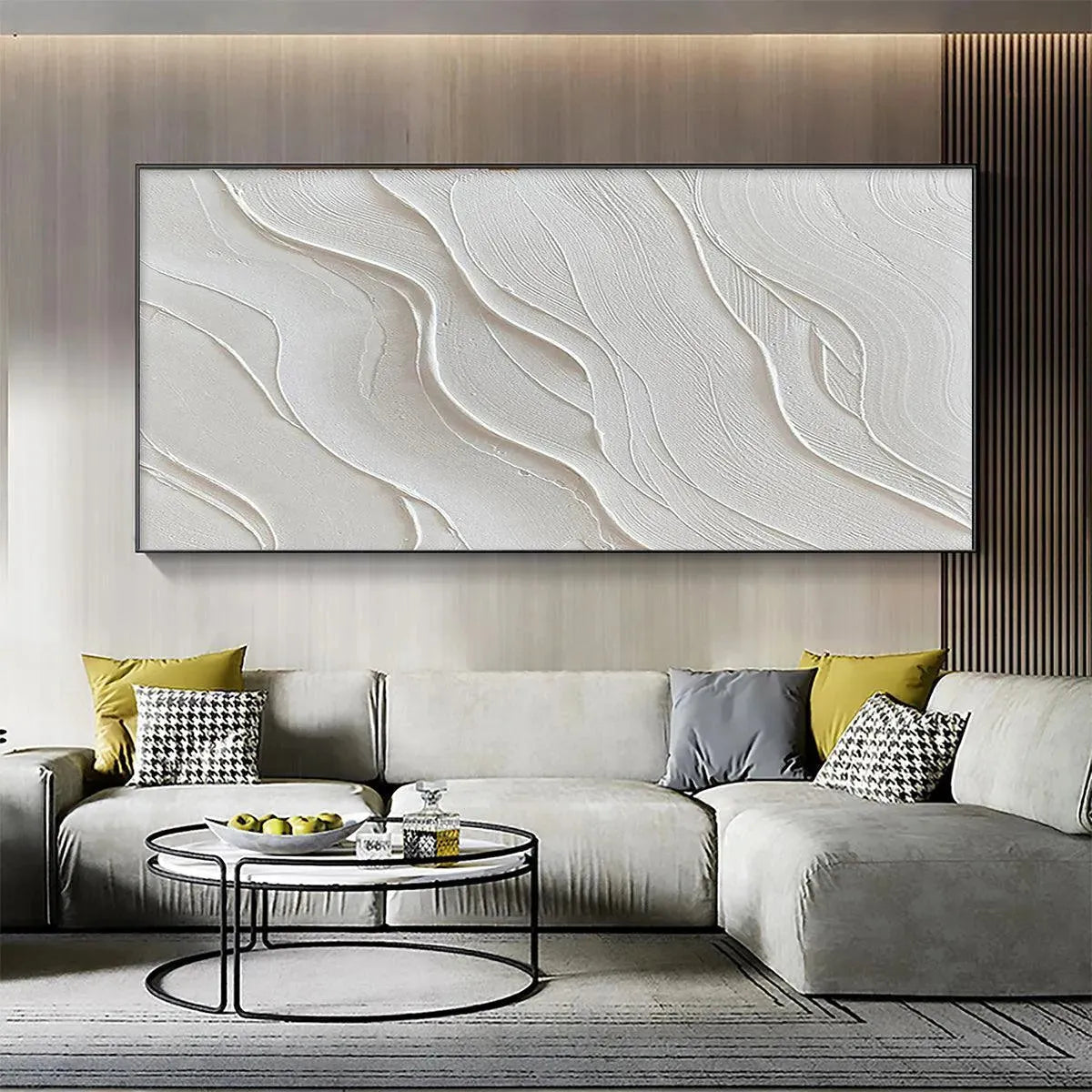
Pro Tip: Hang the art so the bottom edge is 6 to 10 inches above the top of the sofa back. You want the art to feel connected to the furniture, not floating away from it.
-
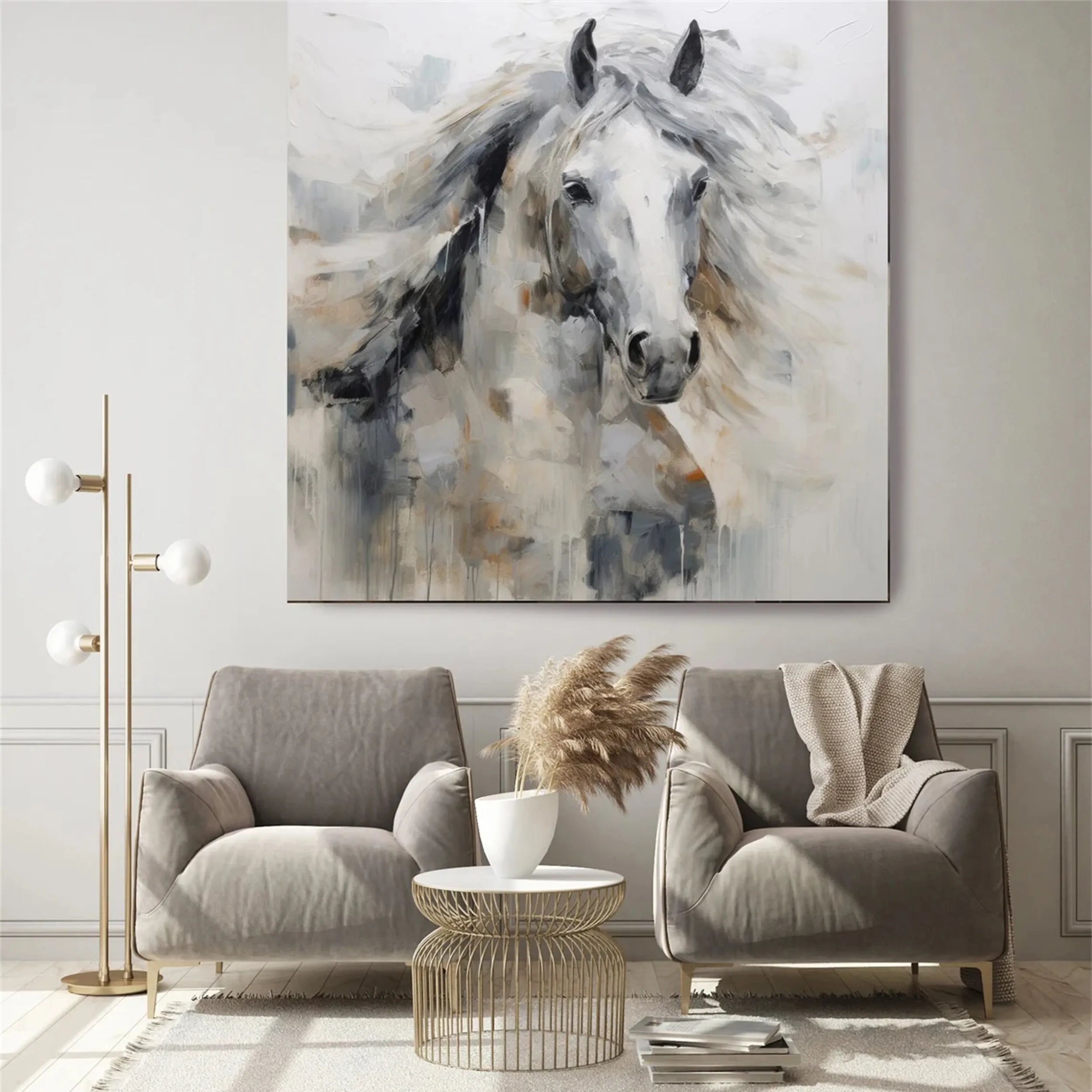
Recommended Size: For a standard three-seater sofa, a 48" x 72" or a large 60" x 60" square piece is often the sweet spot.
In the Bedroom (Above the Headboard)
Art in the bedroom should feel restful and proportional.
-
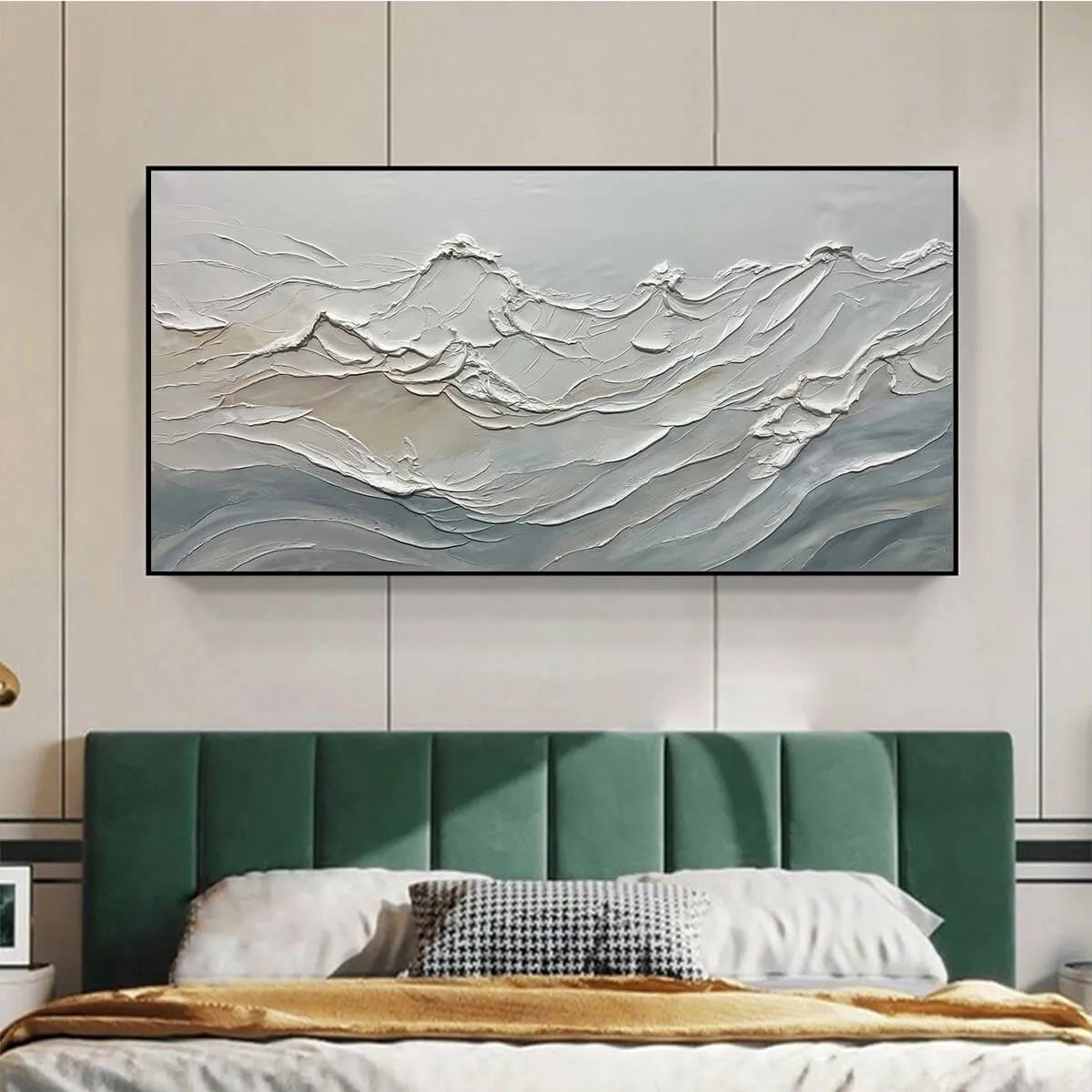
Queen Bed: Look for art that is roughly 40" to 50" wide.
-
King Bed: You’ll need a larger piece, ideally 54" to 65" wide.
-
Alternative: If you don't want one giant piece, consider two medium-sized canvases hung side-by-side to create a cohesive look.
In the Dining Room
In the dining room, people are usually sitting down.
-
The Eye-Level Rule: Hang your 3D textured art slightly lower than you would in a hallway. The center of the painting should be at the eye level of someone sitting at the table.
-
Pro Tip: Ensure the art is narrower than the dining table to avoid a "top-heavy" appearance.
3. Dealing with Empty Walls (No Furniture)
If you are hanging art on a large, empty gallery wall with no furniture below it:
-
The 57-Inch Rule: Gallery professionals hang art so that the center of the piece is 57 inches (145 cm) from the floor. This is the average human eye level.
-
Scale Up: On an empty wall, you can go even larger. A massive vertical abstract can make a ceiling feel much higher.
4. The "Painter's Tape" Secret Hack
Before you hit the "Buy" button, try this pro designer trick:
-
Check the dimensions of the Savy Canvas piece you want.
-
Use painter's tape (or masking tape) to outline those exact dimensions on your wall.
-
Leave it there for 24 hours.
Walk into the room at different times of the day. Does it feel too dominant? Or does it look too small? This is the best way to visualize the physical presence of 3D textured art before it arrives.
5. Orientation Matters: Vertical vs. Horizontal
-
Vertical (Portrait): Best for narrow walls or to make a room feel taller.
-
Horizontal (Landscape): Best for hanging over long furniture like sofas or dining tables.
-
Square: Perfect for creating a modern, balanced look, especially in "grid" arrangements.
Conclusion: When in Doubt, Go Bigger
If you are torn between two sizes, always choose the larger one.
In 2026, the "Oversized Art" trend is stronger than ever. A large, hand-painted textured canvas adds luxury and intent to a room. A small piece looks like an afterthought.
Still not sure? We are here to help! Send us a photo of your wall and the measurements of your furniture, and our in-house consultants will recommend the perfect size for your Savy Canvas masterpiece.





Leave a comment
This site is protected by hCaptcha and the hCaptcha Privacy Policy and Terms of Service apply.